



Many women are familiar with the experience of chasing symptoms that never seem fully explained.
Digestive issues that look like IBS. Migraines that flare around the menstrual cycle. Unpredictable flushing, rashes, or hives. Brain fog, fatigue, anxiety, or sleep disruption.
These symptoms are often treated as separate conditions, and women often have to see multiple specialists who each focus on a different system: one specialist focuses on the gut, another on hormones, another on headaches. But sometimes the underlying issue may not lie in just one system.
Increasingly, clinicians are recognizing that Mast cell activation syndrome (MCAS) may be an overlooked contributor to complex patterns of symptoms, particularly in women. At the center of this conversation is a molecule most people associate only with allergies: histamine.
Histamine: More Than an Allergy Response
Most people think of histamine as the chemical responsible for seasonal allergies — the reason for sneezing, itchy eyes, or congestion during pollen season.
In reality, histamine is a chemical messenger used throughout the body. It helps regulate immune responses, blood flow, digestion, and even brain signaling.
Histamine is released by mast cells, a type of immune cell located throughout the body especially in the skin, respiratory tract, digestive system, and blood vessels. When mast cells detect potential threats such as allergens, microbes, or toxins, they release histamine and other inflammatory molecules to coordinate the immune response.
This response helps:
- increase blood flow
- recruit immune cells
- signal the body to respond quickly to potential threats
When this system works properly, it protects us. But when mast cells become overly sensitive, they may release histamine too easily or too frequently, which can negatively affect multiple organ systems at the same time.
How Histamine Shows Up in Different Systems
One reason mast cell disorders are frequently overlooked — especially in women — is that histamine symptoms depend on where in the body it is released. The same immune signal can show up as very different conditions depending on the organ involved.
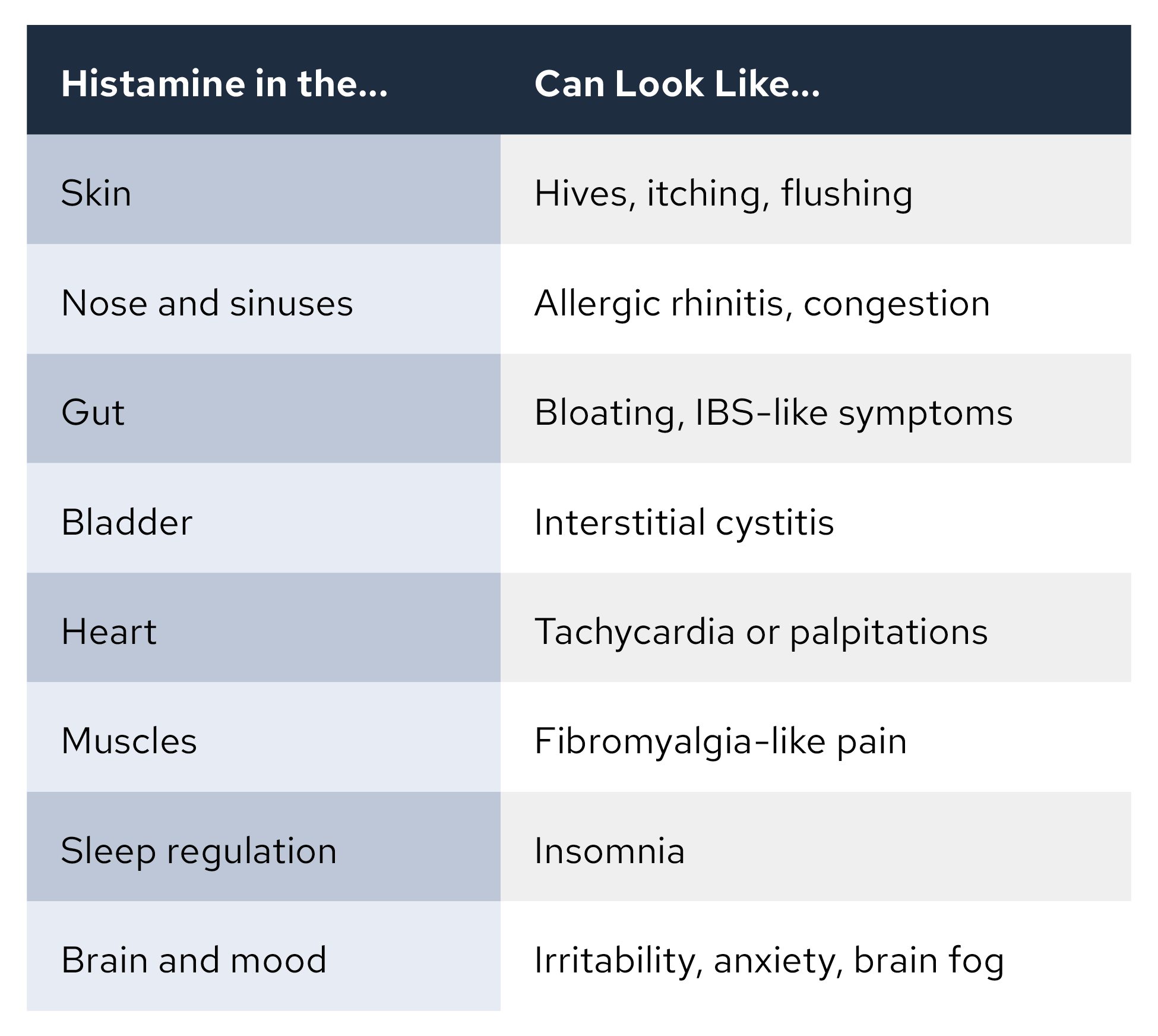
At first glance, these symptoms appear unrelated. They involve different organs, different specialists, and often different diagnoses. But in some individuals they may share a common upstream driver: overactive mast cells releasing histamine.
What Is Mast Cell Activation Syndrome?
Mast cell activation syndrome (MCAS) occurs when mast cells release inflammatory mediators such as histamine too easily or too frequently. “Mast cell activation syndrome is basically like histamines gone wild,” says Dr. Jane Gelfand, functional medicine physician at PALM Health.
Instead of responding only to clear threats, mast cells begin reacting to relatively minor triggers. This can lead to repeated waves of inflammation throughout the body.
“People think of histamine as allergies or hives, but because mast cells are present in so many tissues, it can affect multiple organ systems. That’s why patients often come in with a whole laundry list of symptoms,” says Dr. Gelfand.
Someone might experience digestive issues alongside skin reactions, headaches, fatigue, or brain fog. For many patients, especially women, this creates a confusing clinical picture where symptoms are treated individually rather than connected.
What Can Cause MCAS to Develop?
MCAS rarely appears out of nowhere. It often develops after the immune system has been pushed into a prolonged state of stress or inflammation.
Potential contributors include:
- viral or bacterial infections (such as COVID‑19 or Epstein-Barr)
- mold or environmental toxin exposure
- gut microbiome disruption
- chronic stress or nervous system dysregulation
- trauma or prolonged immune activation
Dr. Gelfand describes this as a “bucket” effect. “I think of everyone as having a proverbial bucket of tolerance. Over time, different stressors fill the bucket — viruses, toxins, stress, immune challenges. Once that bucket becomes full, the immune system may begin reacting more easily than it once did,” she says.
The Connection Between MCAS and Women’s Health
Mast cell disorders appear to affect women more often than men, and hormones may help explain why.
Mast cells contain estrogen receptors, meaning they respond directly to hormonal signals. When estrogen levels rise, mast cells can become more reactive and more likely to release histamine.
Progesterone has the opposite effect; it helps stabilize mast cells and reduce histamine release. When estrogen levels are high relative to progesterone, mast cells may become easier to trigger.
Many women notice mast cell-related symptoms during times of hormonal fluctuation, including:
- ovulation
- the luteal phase of the menstrual cycle
- pregnancy
- perimenopause
- starting or stopping hormonal contraception
Hormone imbalances associated with conditions such as PCOS or endometriosis may also contribute to increased mast cell activity.
Why MCAS Is Often Missed
Because mast cells interact with the immune system, hormones, nerves, and the gut, MCAS can easily mimic several other conditions.
Many women are diagnosed with IBS, migraines, fibromyalgia, chronic fatigue, interstitial cystitis, or severe PMS before mast cell activation is ever considered. In many cases those diagnoses are valid, but mast cell dysregulation may still be contributing to the broader symptom pattern.
Another challenge is that standard allergy testing may produce normal results since MCAS is not always driven by classic allergy pathways.
Diagnosis often relies on:
- patterns of symptoms affecting multiple systems
- supportive laboratory markers
- improvement with mast‑cell‑targeted treatment
There is rarely a single definitive test.
How MCAS Is Typically Addressed
According to Dr. Gelfand, generally focuses on two goals: calming mast cell activity and addressing the underlying factors that triggered it.
- Calming the histamine response
This often includes antihistamines that block H1 and H2 receptors. Natural mast‑cell stabilizers such as quercetin may also be used in some cases. - Reducing histamine load through lifestyle
Certain foods and environmental exposures can increase histamine levels. Common strategies include:
-
- limiting high‑histamine foods
- reducing alcohol
- minimizing fragrance or chemical exposures
- Addressing root causes
Long‑term improvement usually requires investigating the underlying drivers, such as infections, toxin exposure, gut imbalances, or hormonal issues, that pushed the immune system into a reactive state.
The Bigger Picture
Women’s health symptoms are often treated as isolated problems — digestive issues, hormone changes, migraines, fatigue — but the body rarely operates in isolated systems.
Mast cells sit at the intersection of the immune system, hormones, the nervous system, and the gut. When they become dysregulated, symptoms can ripple across multiple body systems.
For some women, understanding mast cell activation may provide an important missing piece of the puzzle. Histamine itself may not be the root problem; it may simply be the signal that something else is asking for attention.
Stay ahead. Restore vitality. Live better, longer at PALM.
We are a premiere longevity club offering concierge functional medicine, regenerative therapies, and personalized lifestyle support. With our elevated and proactive primary care, you can take the most advanced approach to optimizing your health for the current and future you.
Like what you’re reading? Stay connected with us.
Want to stay up to date on all things health and wellness? Subscribe to our mailing list to receive educational content about the latest topics in health, tips on living well from our experts, updates on events, and special offers.